
"19th century coffee trade"
200 article(s) found

Name of the producing country of the International Coffee Organization
International Coffee Organization during the 19th century, coffee became an important international trade because of the large number of demand. It makes most countries earn foreign exchange from coffee export trade as a source of money income for farmers and is an important trade in most countries. Because the split led to changes in prices and product standards, it ended at a conference in New York in 1962.
Wonderful fruit-flavored coffee Kenyan coffee
It entered Kenya in the 19th century, when Ethiopian coffee drinks were imported into Kenya through southern Yemen. But it was not until the early 20 th century that the Bourbon Coffee Tree was saint. The Austin Mission (St.AustinMission) was introduced. Kenyan coffee is mostly grown at 15002100 meters above sea level and is harvested twice a year. To ensure that only ripe berries are picked, people must patrol the forest

Wonderful fruit-flavored coffee Kenya boutique coffee
It entered Kenya in the 19th century, when Ethiopian coffee drinks were imported into Kenya through southern Yemen. But it was not until the early 20 th century that the Bourbon Coffee Tree was saint. The Austin Mission (St.AustinMission) was introduced. Kenyan coffee is mostly grown at 15002100 meters above sea level and is harvested twice a year. To ensure that only ripe berries are picked, people must patrol the forest

Can you add sugar and milk to the Brazilian Santos black coffee? is the Brazilian Santos milk coffee good?
Professional coffee knowledge exchange more coffee bean information please follow the coffee workshop (Wechat official account cafe_style) in the 1830s, coffee accounted for 43.8% of Brazil's total Santos exports. In the mid-19th century, coffee farming peaked in Rio de Janeiro, centered around the Paraiba Valley. In 18511860, the average annual output of Brazilian coffee reached 2.6 million bags. So far
Wonderful fruit-flavored coffee-Kenyan coffee
It entered Kenya in the 19th century, when Ethiopian coffee drinks were imported into Kenya through southern Yemen. But it was not until the early 20 th century that the Bourbon Coffee Tree was saint. The Austin Mission (St.AustinMission) was introduced. Kenyan coffee is mostly grown at 15002100 meters above sea level and is harvested twice a year. To ensure that only ripe berries are picked, people must patrol the forest

Characteristics of Kenyan Coffee producing areas introduction of Kenyan Coffee Flavor Kenya Coffee
It originated in Kenya in the 19th century, when Ethiopian coffee drinks were imported to Kenya through Southern Yemen. But it was not until the early 20th century that the bourbon was introduced by the St. Austen Mission (St.AustinMission). Kenyan coffee is mostly grown at an altitude of 1500m, 2100m, and is harvested twice a year. To ensure that only ripe berries are picked, people must
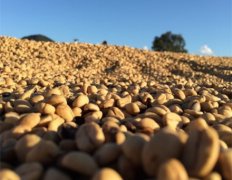
Kenyan boutique coffee introduction Kenyan coffee specialty Kenyan coffee flavor Kenyan coffee
It entered Kenya in the 19th century, when Ethiopian coffee drinks were imported into Kenya through southern Yemen. But it was not until the early 20 th century that the Bourbon Coffee Tree was saint. The Austin Mission (St.AustinMission) was introduced. Kenyan coffee is mostly grown at 15002100 meters above sea level and is harvested twice a year. To ensure that only ripe berries are picked, people must patrol the forest

High-quality coffee beans common sense Kenyan coffee raw beans
Coffee entered Kenya in the 19th century, when Ethiopian coffee drinks were imported into Kenya through southern Yemen. But it was not until the early 20th century that the bourbon was introduced by the St. Austin Mission. Kenyan coffee is mostly grown at an altitude of 1500 to 2100 meters and is harvested twice a year. To ensure that only ripe berries are picked, people must be in the forest
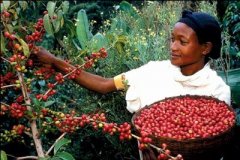
The Origin of Kenyan Coffee: Kenyan Coffee walks into Africa
It entered Kenya in the 19th century, when Ethiopian coffee drinks were imported into Kenya through southern Yemen. But it was not until the early 20th century that the bourbon was introduced by the St. Austen Mission (St.AustinMission). Kenyan coffee is mostly grown at an altitude of 1500m, 2100m, and is harvested twice a year. To ensure that only ripe berries are picked, people must be in the forest

African Kenyan Coffee AA grading system Kenyan Coffee producing area Flavor
Professional coffee knowledge exchange more coffee bean information please follow the coffee workshop (Wechat official account cafe_style) front street-Kenya coffee grading system, a brief introduction to the development history of coffee has been recorded as early as the 8th century AD, coffee shops were also popular in the 17th century, while its neighboring countries
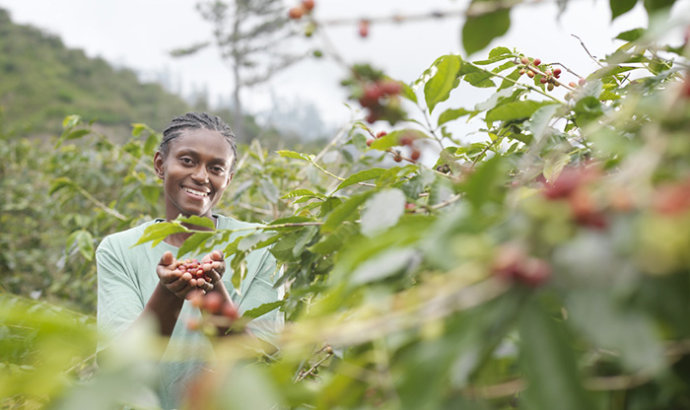
The abnormal prosperity of Brazil's "coffee kingdom"
From the early 16th century to the 1820s, Portugal colonized Brazil for more than 300 years. Portugal colonial rule had a profound impact on Brazil's economy, politics, society and culture. Single product system and large estate system became fetters restricting the development of modern Brazil's economy. Due to the incomplete nature of the independence movement, Brazil remained a colony for 100 years after independence.

Kenyan coffee with a wonderful fruit flavor
It entered Kenya in the 19th century, when Ethiopian coffee drinks were imported into Kenya through southern Yemen. But it was not until the early 20 th century that the Bourbon Coffee Tree was saint. The Austin Mission (St.AustinMission) was introduced. Kenyan coffee is mostly grown at 15002100 meters above sea level and is harvested twice a year. To ensure that only ripe berries are picked, people must patrol the forest

This paper introduces in detail the relationship and difference between Kenya coffee farm and coffee beans.
Kenya is bordered to the north by Ethiopia, the origin of Arabica coffee trees, but it was not until the beginning of the 20th century that coffee cultivation began. In the 19th century, missionaries introduced Arabica trees from the leaves, but did not plant them in large quantities. It was not until 1893 that coffee was cultivated on a large scale because of the introduction of Brazil's ancient bourbon seeds. That is to say, Kenyan coffee is of Brazilian origin, because of water.

Characteristics of Kenyan coffee beans Kenyan coffee beans from Kenyan coffee producing areas
It entered Kenya in the 19th century, when Ethiopian coffee drinks were imported into Kenya through southern Yemen. But it was not until the early 20th century that the bourbon was introduced by the St. Austen Mission (St.AustinMission). Kenyan coffee is mostly grown at an altitude of 1500m, 2100m, and is harvested twice a year. To ensure that only ripe berries are picked, people must be in the forest

Today, Brazil is still the global coffee kingdom.
The earliest coffee exports were shipped from Maranion in northeastern Brazil to Lisbon in 1731, but Rio de Janeiro soon became a distribution center for Brazilian coffee exports and helped Brazil maintain its trade balance for a long time. In the 19th century, coffee was the only product that did not encounter fierce international competition among all Brazilian exports. In the first 20 years of the 20th century, Brazilian coffee
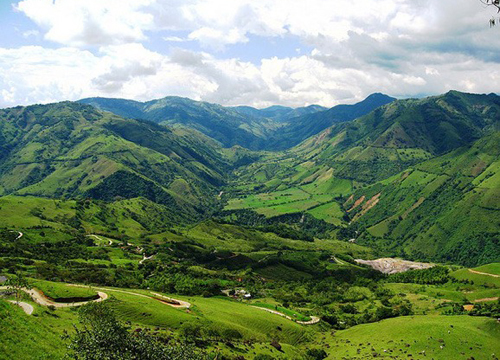
Brazilian Coffee Industry Brazilian Coffee production areas learn about Brazilian Coffee Industry
Coffee industry in Brazil Coffee is a traditional industry in Brazil. Since 1960, coffee cultivation in Brazil has been ranked first in the world, with an average annual output of 24.6 million bags (60 kg each). In 2002, due to favorable weather and a good year for coffee production, Brazilian coffee reached the best level in history, reaching 47.2 million bags, an increase of 59.6 per cent over 28.137 million bags in 2001. According to the United States Department of Agriculture 20
The international history of coffee industry introduces how the bubble of Brazilian coffee economy ended.
For professional baristas, please pay attention to the bubble economy caused by coffee in the coffee workshop (Wechat official account cafe_style) in Brazil at the beginning of the 20th century. Large-scale coffee production in Brazil began in the 19th century due to a price collapse due to mass production of coffee. Coffee is grown in Rio de Janeiro, Minas Gerais, S ã o Paulo and traded everywhere. Brazil became enslaved and cultivated

An Introduction to Anaerobic Solarization Treatment of the Native Species of Summer Rose in La Delas Estate, Colombia
Coffee came to Colombia in the late 18th century through Christian priests among Spanish colonists. The first coffee was planted in the northern provinces of Santander and Boyaca, and gradually spread to various regions of the country as a cash crop, but it was not until the end of the 19th century that it really took full possession.

Introduction to the brief history of Salvadoran coffee.
Professional coffee knowledge exchange more coffee bean information please follow the coffee workshop (Wechat official account cafe_style) A brief history of coffee in El Salvador: in the mid-19th century, El Salvador became independent from Nicaragua after the disintegration of the Union, and its cash crop was mainly locust blue, a crop used to make indigo dyes until the mid-19th century, when chemical dyes were invented.
Coffee short story-German coffee
In 1721, the earliest coffee shop in Germany was born in Berlin. As soon as cafes became popular in Germany, they were restricted by the local authorities. Therefore, compared with other countries, the development of German coffee is relatively simple. It was not until the early 19th century that coffee became one of the best money-making tools at the disposal of Germans. Coffee farming was vigorously developed in Latin America and Central America in the mid-19th century.